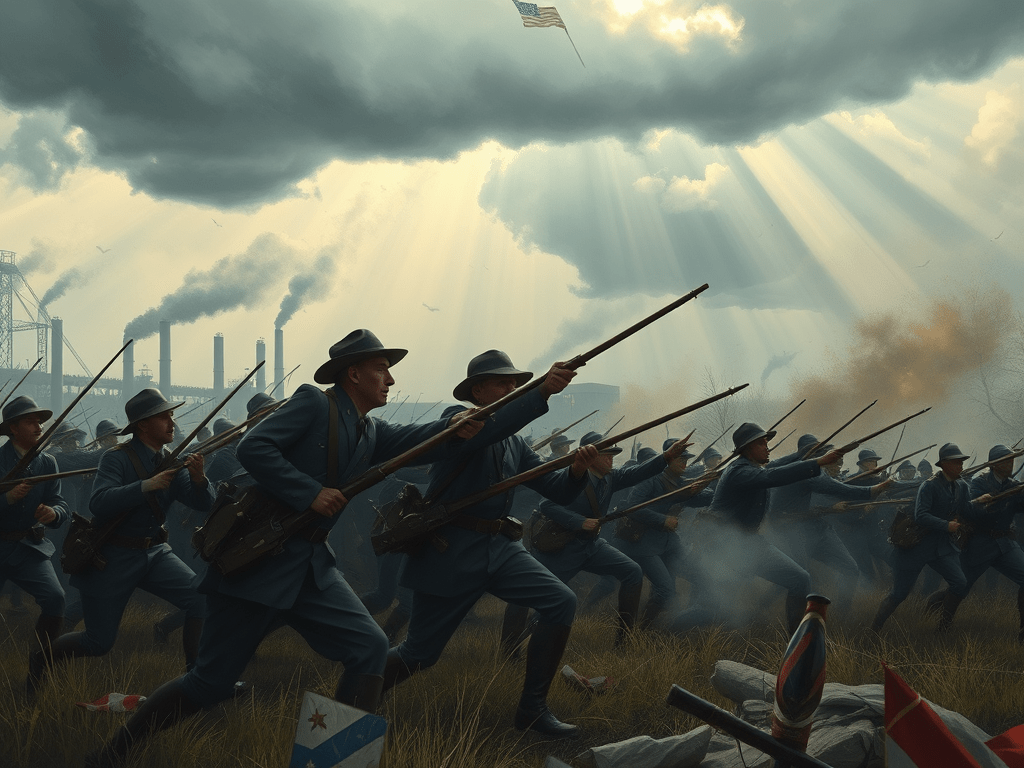
This episode examines the American Civil War not as an isolated event, but as the culmination of decades of escalating sectional conflict primarily driven by the institution of slavery. It traces the economic and social divergences between the industrial North and the agrarian, slave-dependent South, highlighting how westward expansion and political compromises repeatedly failed to resolve these tensions, instead fueling events like “Bleeding Kansas” and the Dred Scott decision. The text then details the course of the war from initial strategies to key battles like Antietam, Gettysburg, and Vicksburg, emphasizing how the conflict transformed into a struggle for emancipation following Lincoln’s Emancipation Proclamation. Finally, the report concludes by analyzing the Reconstruction era, acknowledging its revolutionary constitutional amendments but ultimately portraying it as a tragic failure due to a lack of federal will to protect the rights of freed people against violent opposition, leaving a legacy of racial inequality.
Rabbit Hole
Things I want to know about
 Rabbit Hole
Leave a comment